Additional Resources
Thank You!
Thank you for joining Amanda and Charlene at the America’s Credit Unions HR Conference for Building Bench Strength Through Intentional Development. During the session, we explored a shared reality facing many financial institutions today: growing skills gaps, rapid digital transformation, and rising employee expectations are putting unprecedented pressure on leadership pipelines.
This additional content is designed to help you continue the conversation beyond the room. As we discussed, building bench strength isn’t simply about filling roles when vacancies appear—it’s about intentionally developing people over time in ways that align talent, strategy, and future needs.
The resources below offer practical thinking tools, leadership insights, and development pathways to support reskilling, upskilling, and career pathing, so you can strengthen retention, engagement, and readiness while keeping great talent growing within your organization.
Should you have any questions or want to discuss the speech topics or any of the content below, please don’t hesitate to reach out to Amanda (ahohimer@cmyers.com) or Charlene (cleland@cmyers.com).
For access to the slides used during the presentation, click here. This information will be available until the end of May 2026.
Featured Readings
These blogs build on the key themes introduced in the speech, offering deeper insights, practical examples, and expanded perspectives on the topics discussed.
Develop Strategic Thinkers Before You Need Them
Why strategic thinking can’t be an “emergency skill” and how leaders can intentionally build it early.
10 Things That Stifle Critical Thinking (and 5 Ways to Help It Flourish)
Common organizational habits that quietly shut down thinking—and practical ways to reverse them.
Four Practices of Thriving Leaders
The mindsets and behaviors consistently found in leaders who thrive in complexity.
Accelerating Leadership Growth Through Cross‑Organizational Experience
How exposure beyond one role or function fast‑tracks leadership maturity.
C‑Suite Leadership Development
What intentional leadership development looks like as leaders move into enterprise‑level responsibility.
Commonly Missed Development Accelerators
Strategic Thinking Skills
Many team members are highly effective in their roles but have limited visibility into how their work connects to broader strategy or financial performance. When they start to understand how different parts of the organization interact, and how decisions ripple through the business model, their thinking changes. Strategic thinking is foundational to a strong talent pipeline. Employees are sometimes viewed as either strategic thinkers or not strategic thinkers, but many have the capability if they are exposed to it. While it can be taught formally, plenty of opportunities already exist through simply discussing the reasons for different projects, decisions, and activities through the lens of the strategy.
Critical Thinking Skills
Critical thinkers are team members who consistently and accurately identify objectives, effectively analyze data, and use logic to come to conclusions. These critical thinkers use logic, reasoning, and creativity to question assumptions and evaluate competing ideas rather than accepting information at face value. Employers want employees who “connect the dots” and “engage their brains.” It can help to break down critical thinking into these 7 components as students learn, practice, and apply critical thinking skills.
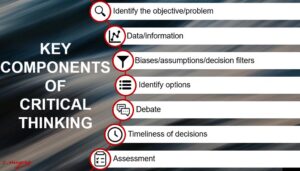
Leaders strengthen critical thinking by modeling curiosity, slowing decision‑making when needed, and rewarding thoughtful dialogue, not just fast answers.
Project Management Skills
Project management skills are invaluable for team members because they include key capabilities, including how to prioritize initiatives, communicate clearly, and deliver results on time, on budget, and at the expected quality. It fosters cross-functional collaboration, sharpens problem-solving, and helps create a culture of accountability. It can also reveal beneficial lateral moves within the organization. Projects need to get done anyway, so using them as a development opportunity for individuals requires little extra effort while building organizational capacity.
Cultivating Talent Series: A Flexible, Multi-Year Development Series
The Cultivating Talent Series is designed to support emerging and developing leaders through intentional, personalized growth over time. Rather than following a single prescribed path, participants can shape their development based on their current role, future aspirations, and the capabilities they most need to strengthen.
Many organizations choose to use the Cultivating Talent Series as a two‑year development experience, where participants typically attend two courses per year, selected from the four offerings. Course selection is intentionally flexible and can evolve as leaders grow, take on new responsibilities, or clarify their leadership goals.
This approach allows development to remain relevant, timely, and aligned with both individual needs and organizational priorities—while still creating consistency and momentum over time.
Choosing the Right Courses
Participants and organizations select courses based on:
- Current leadership role and readiness
- Desired next role or career direction
- Strengths to build on and gaps to address
- Organizational priorities and future skill needs
The four Cultivating Talent courses are designed to stand alone, while also complementing one another as part of a longer development journey.
Course Options
Cultivating Project Management
This course equips emerging leaders with the skills and confidence to plan, manage, and influence projects that drive strategic progress. Participants learn how to prioritize initiatives, communicate clearly, and deliver results on time, on budget, and at the expected quality, while building the mindset to lead future initiatives. By strengthening project execution capabilities, this experience fosters cross-functional collaboration, sharpens problem-solving, and creates a culture of accountability that elevates both individual talent and organizational performance.
Cultivating Leadership Presence
This course is designed to jump start an individual’s development with focus on communication, critical thinking, and leadership presence. The secondary emphasis includes a combination of advancing critical thinking and financial acumen, using real-world situations.
Cultivating Process Improvement
This course empowers participants to lead initiatives that improve experiences for members and employees while streamlining processes for greater efficiency. Through practical tools and coaching, you’ll learn how to identify friction points, prioritize improvements, and foster a culture of continuous progress. As expectations rise and change accelerates, these skills position you to confidently drive meaningful improvements that align day-to-day work with strategic goals, creating a competitive advantage for your institution.
Cultivating Financial Acumen
This course is designed to help talent gain a clearer understanding of key financial metrics, how they are interrelated, and the types of decisions that impact them. Participants will also explore primary economic engines that often drive the business model. The secondary emphasis includes elevating leadership presence and communication.
Strategic Thinking Exercise
Financial institutions face a widening skills gap, rapid digital transformation, and evolving employee expectations. Building strong talent pipelines isn’t just about filling roles; it’s about creating pathways for growth that align with organizational strategy. Strategic thinking questions, below, can help your leadership teams gain clarity around your strategic talent needs, while strengthening retention, engagement, and readiness for the future.
- Think about the reasons for labor challenges. Include specific factors for our market. Which do we think will be short-term and which will be long-term?
- How can we turn our talent development, recruitment and management into a competitive advantage?
- What kind of a talent organization do we want to be? In other words, what is our desired strategic people plan (our talent structure and competencies to take us into the future)?
- How can we achieve our strategic people plan? How can we refocus our talent retention, development and recruitment efforts for this purpose?
- Which areas of the organization need more depth or more bandwidth? How do we anticipate that changing in the next five to 10 years?
- How are the competencies required to support our business model changing?
- Will we highly value self-starters, innovators, collaborators or experimenters? Will we provide more certifications and training or do we want people to drive their own development?
- What is our desired value proposition as an employer? Why?
- Imagine the best place you can think of to work. Go beyond pay and benefits. What are the most important aspects?
- Who are our high performers? Why? Were they developed internally? If so, how? If not, what would it have taken to do so? How will our definition of high performer change in the future?
- Some people just want jobs and are not interested in professional advancement. What conditions make that a good exchange for the organization?
- Think about those who clearly understand the purpose and strategy of the organization. Did they drive toward that knowledge themselves? What were the defining moments or events that cultivated this deeper engagement? What level were they in the organization when they started to “get it”? How can we use this knowledge to get more team members engaged on a deeper level?
- What are the characteristics of those who thrive in our organization? Why? Are those the characteristics that will serve the organization in the future?
- What are we going to do differently that is truly enough to meet our talent challenges?
As you engage in strategic thinking around these questions, recognize that if your desired outcomes amount to building a better talent machine for the future, a change in culture may be in order. This is not a task to be handed to the human resources department to “fix.” It will require senior leaders working together to make it happen. To shift the culture, people at many levels need to think and act differently. The senior leaders must model new behaviors and discuss them regularly until they become ingrained in the culture.
Contact Information
Amanda Hohimer – Vice President, Strategic Facilitator
Charlene Leland – Vice President, Strategic & Leadership Facilitator
This information will be available until the end of May 2026.
